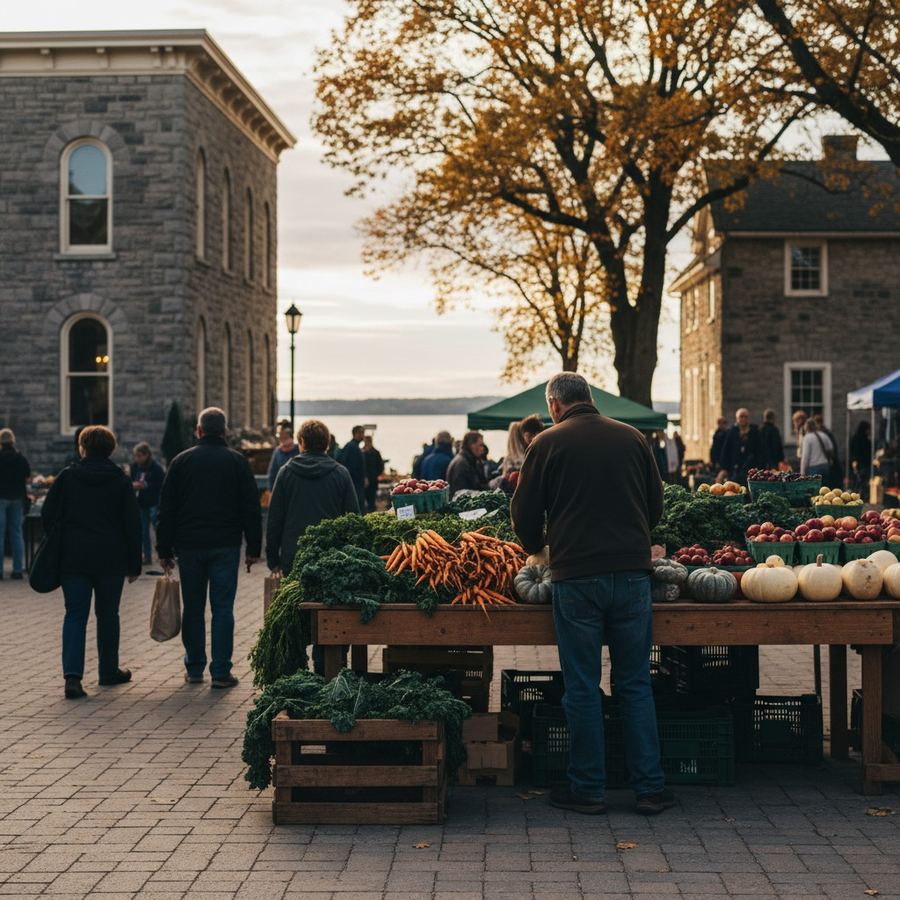
Perth's main street has a stone building from 1840 at one end and a decent coffee shop at the other, with a working courthouse, an independent bookstore, and the Tay River running through the middle. Nobody is trying to sell you a "charming small-town experience." People just live there and always have. That distinction matters when you are deciding which small towns in Southern Ontario are worth a drive.
The difference between a good small-town visit and a disappointing one usually comes down to a few things: Is there a walkable downtown with actual shops that locals use? Is there something to do besides look at buildings? Can you get a decent meal? And is the town being itself, or performing a version of itself for tourists? The towns on this list pass those tests.
Perth
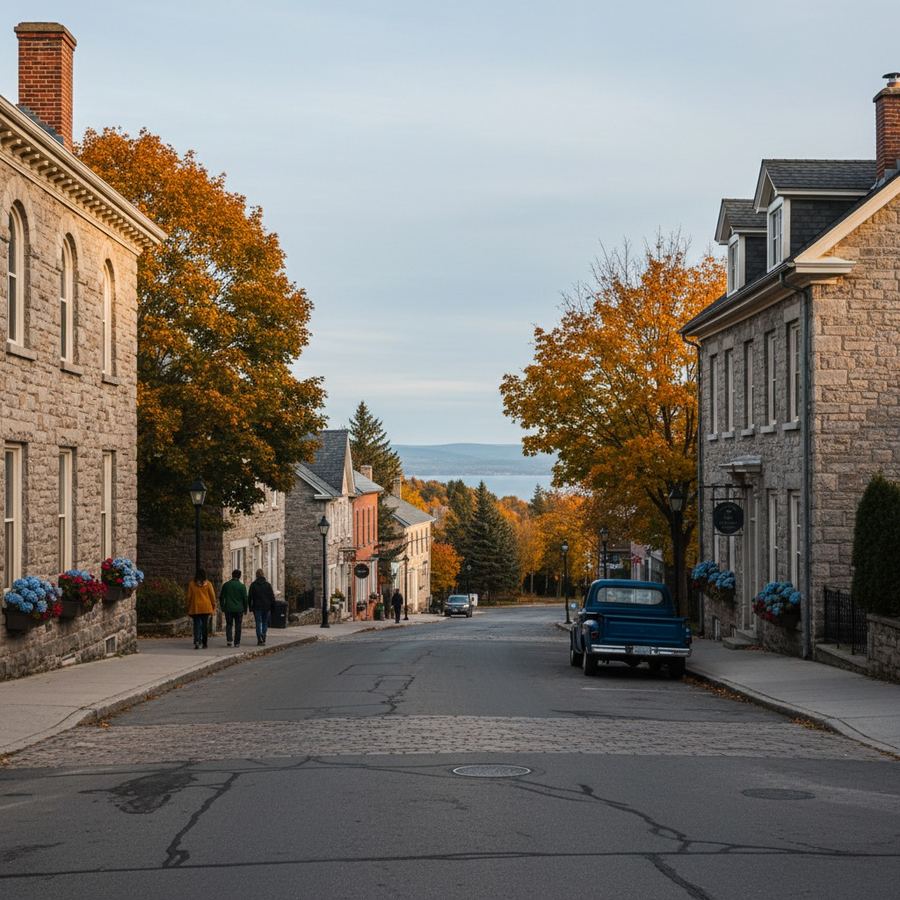
Perth is about 290 km east of Toronto and three hours by car, but it is also an easy day trip from Ottawa (about 80 km southwest). The town was founded in 1816 by Scottish settlers and the stone architecture has survived remarkably well. The Tay River basin in the centre of town is walkable, the Stewart Park Festival brings live music in July, and the Kilt Run each September is exactly what it sounds like. Perth has good restaurants, a year-round bakery scene, and enough independent shops to fill an afternoon without resorting to antique malls. For a deeper look at what is available in town, perth.ca covers events, services, and community information.
Elora
Elora sits about 130 km west of Toronto on the Grand River, and the gorge is the main attraction. The limestone cliffs drop 22 metres to the river, and the conservation area offers swimming and tubing in summer. The town itself is small but well curated, with galleries, restaurants, a bakery, and the Elora Mill Hotel, which reopened as a boutique hotel in 2018. The downside: Elora gets busy on summer weekends and parking can be a fight. Weekdays or fall visits are noticeably better.
Bayfield
Bayfield is a small Lake Huron village about 230 km from Toronto with a population under 1,000. The main square has a handful of galleries, a bookshop, and a couple of restaurants that are better than they have any right to be for a town this size. The beach is a short walk from the centre, and the surrounding countryside is flat, quiet farmland. This is not a place for a packed itinerary. It is a place to eat well, walk slowly, and read a book on the beach. Most visitors combine it with a stop in Goderich, about 20 minutes north.
Stayner
Stayner is the kind of town most people drive through on their way to Collingwood without stopping. That is a mistake. It is a working agricultural town in Clearview Township, about 140 km north of Toronto, with a main street that has a hardware store, a few restaurants, and the rhythm of a place that does not depend on tourists. Stayner is also increasingly attracting people priced out of Collingwood's real estate market. The community has its own identity separate from the resort economy to the north. You can find local information and community updates at stayner.com.
Shelburne
Shelburne is about 100 km northwest of Toronto on Highway 10, sitting at the edge of Dufferin County where the farmland starts to roll. The town is best known for the Canadian Open Old Time Fiddle Championship, held each August since 1951, which draws competitors and audiences from across the province. Beyond the festival, Shelburne has a practical downtown with a mix of shops and services that serve the surrounding farming community. It is not polished, and that is part of the appeal. The town is growing as a commuter option for people who work remotely or drive to the GTA occasionally. For local information, shelburne.com has community details.
Westport
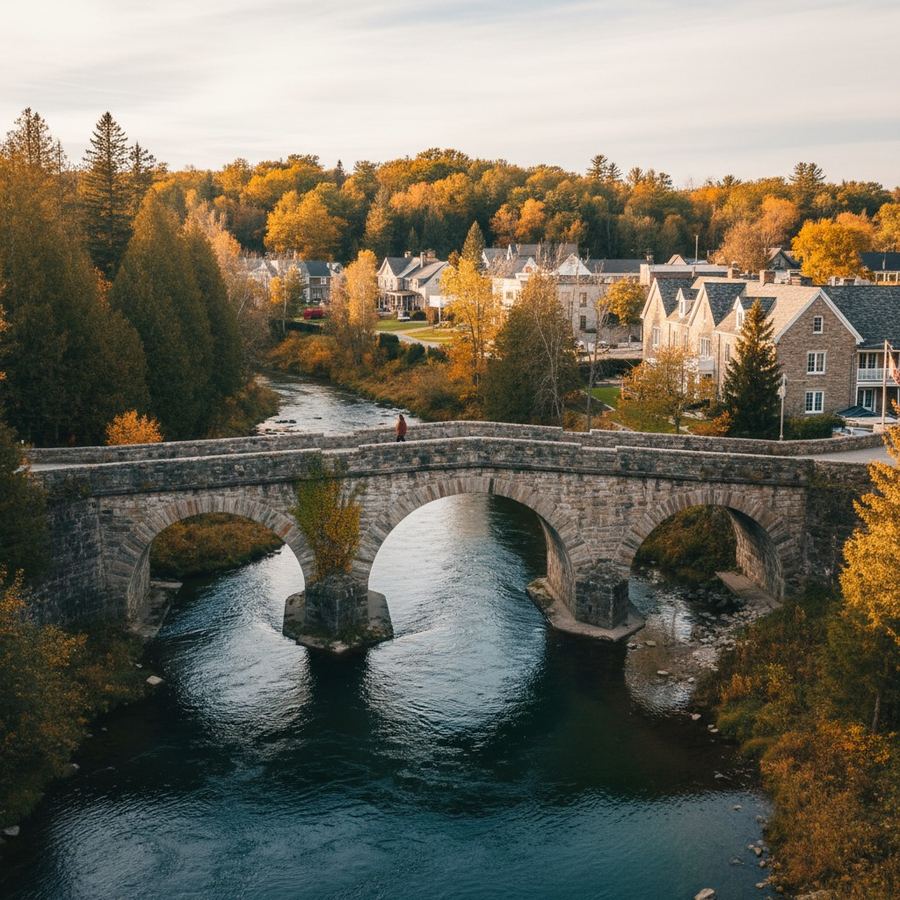
Westport sits on the Rideau Lakes about 300 km east of Toronto, and unless you are a boater or a cottager, you may never have heard of it. The village has a small commercial strip with a brewery, a couple of cafes, and a general store. Foley Mountain Conservation Area on the edge of town has a lookout over Upper Rideau Lake that is worth the short hike. Westport is quiet, genuinely so, and works best as part of a longer trip through Eastern Ontario rather than a standalone destination.
Merrickville
Merrickville sits on the Rideau Canal about 280 km east of Toronto and calls itself the "Jewel of the Rideau," which is the kind of nickname that usually signals over-promotion. In this case, the town mostly delivers. The main street has stone buildings, a working lock station, boutique shops, and a couple of restaurants that are better than average. It is small enough to walk in an hour but engaging enough to slow down for. The Rideau Canal is a UNESCO World Heritage Site, and Merrickville is one of the most pleasant stops along it. Best visited between May and October when the canal locks are operating.
Creemore
Creemore is about 130 km north of Toronto in Clearview Township, and most people know it because of the brewery. Creemore Springs has been brewing since 1987 and the brewery building on Mill Street is the centre of town life. But Creemore's main street is also genuinely good on its own: a bookshop, a couple of restaurants, the old town hall, and a general store that has operated for over a century. The town has around 1,300 people and draws visitors year-round. The Creemore Farmers Market on Saturday mornings in summer is worth a stop.
Port Hope
Port Hope is about 110 km east of Toronto on Highway 401 and has one of the best-preserved 19th-century main streets in Ontario. The Capitol Theatre, restored to its 1930 Art Deco glory, is the anchor. The rest of the downtown has independent shops, restaurants, and a bookstore in a heritage building. The Ganaraska River runs through town and the annual fish ladder viewing in spring, when rainbow trout run upstream, is genuinely interesting. Port Hope has benefited from its proximity to Toronto without being swallowed by it.
What Makes a Good Visit
The towns that work best as day trips or weekend stops share a few traits. They have a walkable core where you can park once and explore on foot. They have at least one good place to eat. They have something specific that gives the town character, whether that is a river, a heritage building, a brewery, or a local tradition. And they are not trying to be something they are not.
The disappointments tend to be towns that look good on a map but have a main street full of closed storefronts, or towns that have leaned so hard into tourism that they feel like a gift shop with a postal code. The places on this list are not immune to either problem, but they are generally in good shape.
For more on where to go from Toronto, see the weekend getaways guide, and for towns where you might actually want to live, the where to live guide covers the practical side.