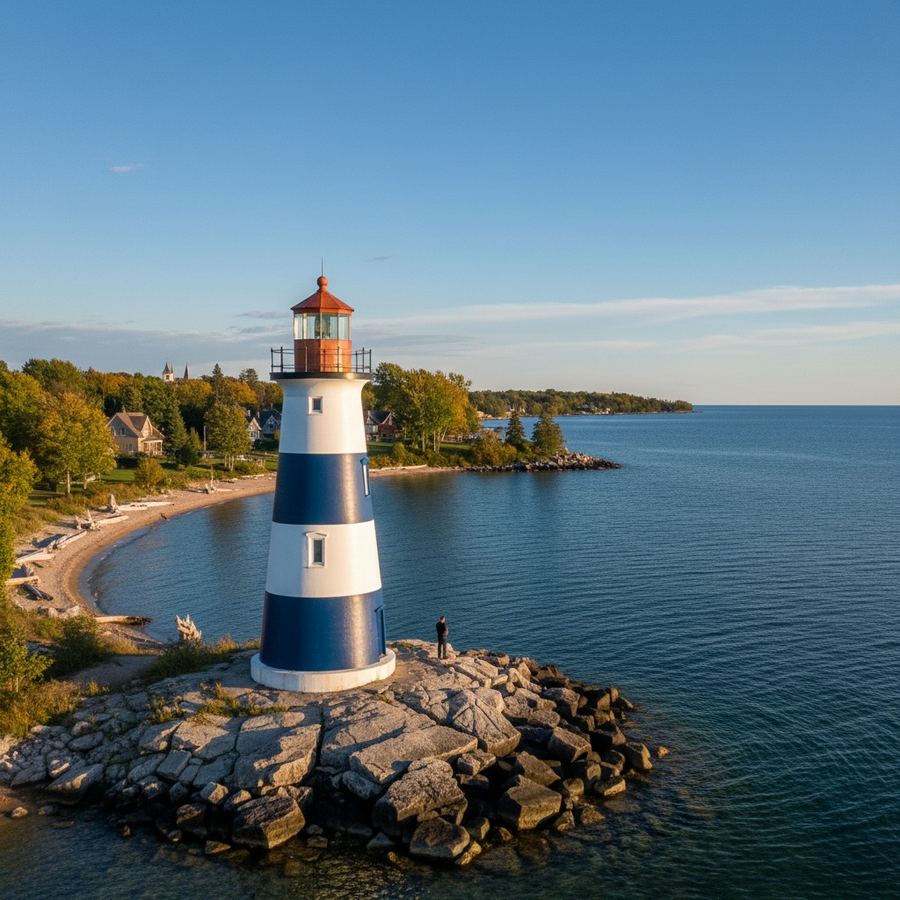
The parking lot at Wasaga Beach fills before 11 a.m. on any summer Saturday in July. That single fact tells you most of what you need to know about beach season in Southern Ontario: the demand is real, the supply of good freshwater sand is limited, and if you want a decent spot without circling for 45 minutes, you need a plan. The good news is that there are more beach towns than most people realize, spread across three different Great Lakes, each with a different personality.
Beach season in Southern Ontario runs from late June through Labour Day, with water temperatures peaking in late July and August. Lake Huron and Georgian Bay are warmer and shallower near shore than Lake Ontario, which matters if you are bringing kids. Here is what to know about the towns worth visiting.
Wasaga Beach
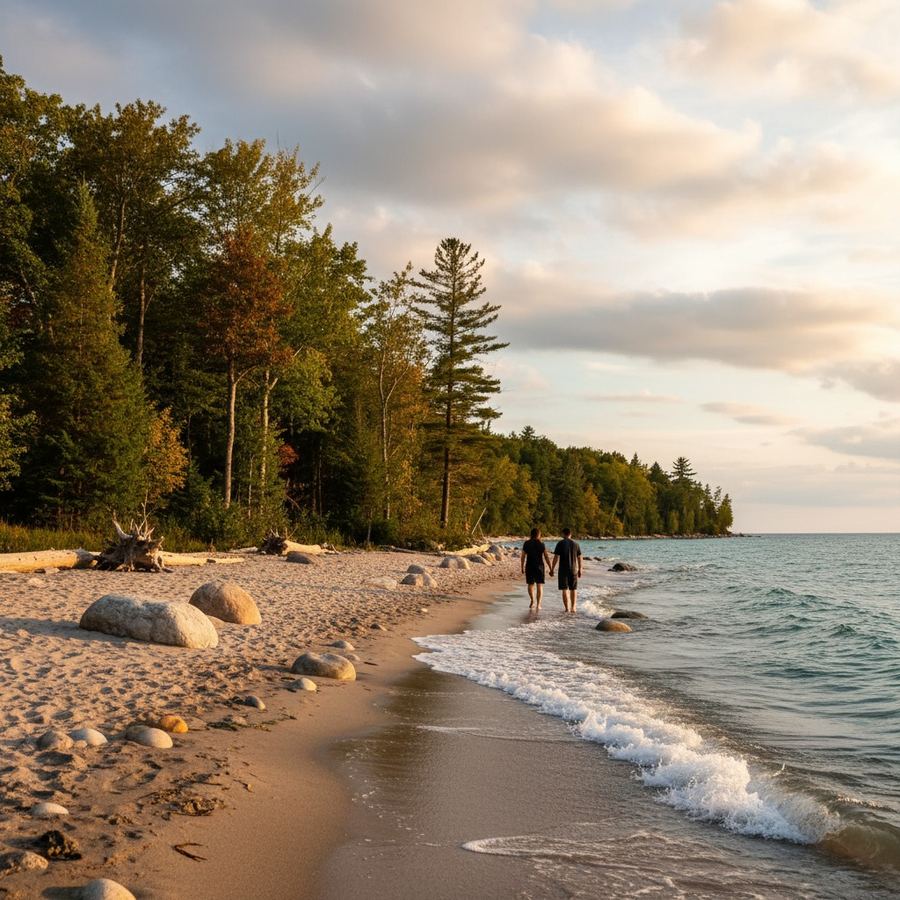
Wasaga Beach is the longest freshwater beach in the world at 14 kilometres, and it operates like a small city in the summer. The beach is divided into numbered areas, with Beach Area 1 being the busiest and most commercialized. The strip of restaurants, ice cream shops, and souvenir stores behind Beach 1 has a boardwalk-town feel that some people love and others find exhausting. If you want something quieter, drive farther along the shore to Beach Areas 4 through 6, where the crowds thin out considerably.
The reality of Wasaga is that it is the default beach for the Greater Toronto Area. About 150 km north of Toronto via Highway 400 and Highway 26, the drive takes around 90 minutes without traffic and well over two hours on a Friday afternoon. Parking is paid in the main areas and fills up fast on long weekends. The town has more permanent residents than many people expect and a year-round community beyond the summer rush. For local information beyond beach season, wasagabeach.net covers the community side of things.
Vibe: Busy, family-oriented near Beach Areas 2-4, younger and louder near Beach 1. Good for people who want amenities close by.
Sauble Beach
Sauble Beach sits on Lake Huron near the base of the Bruce Peninsula, about 270 km northwest of Toronto. It is a long, wide sand beach with a main street of seasonal shops and restaurants just behind it. The beach itself is excellent, with clean sand and a gradual entry that works well for families. Sauble is quieter than Wasaga but still gets very busy on weekends in July and August. Parking enforcement is strict and the lots fill up. The surrounding area is mostly cottage country and small rural communities.
The drive from Toronto is about three hours on Highway 10 and Highway 6, and the last stretch is two-lane highway, so there is no quick way in or out on a Saturday afternoon.
Vibe: Family beach with a relaxed cottage-country atmosphere. Less commercial than Wasaga, more than Kincardine.
Grand Bend
Grand Bend on Lake Huron is the party beach of Southern Ontario. The strip of bars and patios along the main drag fills up with a younger crowd on summer weekends, and the beach itself has a social energy that sets it apart from the other towns on this list. Pinery Provincial Park, just south of town, has some of the most beautiful dune beaches in Ontario and is a completely different experience from Grand Bend's public beach.
Grand Bend is about 225 km from Toronto, roughly a 2.5-hour drive on Highway 401 and Highway 4. It draws more from the London and Kitchener-Waterloo area than from the GTA, which means the crowd is slightly different from what you will find at Wasaga or Sauble.
Vibe: Social, younger crowd, nightlife. If you are looking for quiet, this is not the place on a Saturday night.
Kincardine
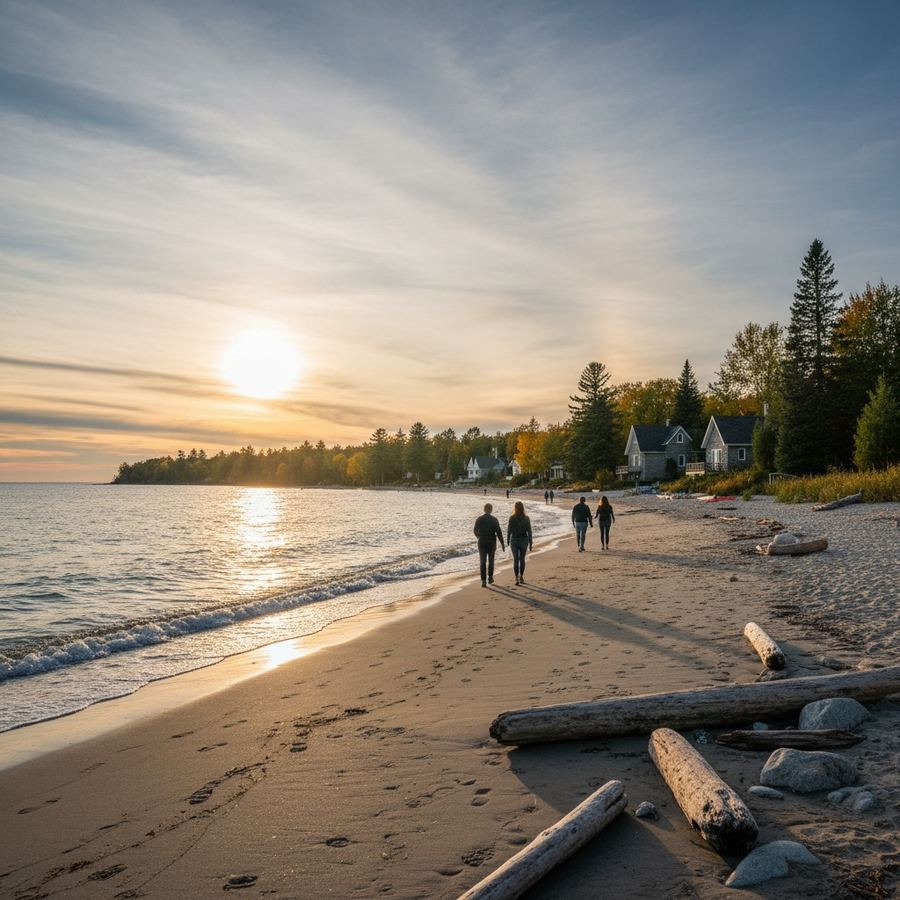
Kincardine is the beach town for people who want a real town that happens to have a great beach. The Lake Huron waterfront has a long sand beach, a lighthouse, and a boardwalk. The downtown is walkable with independent shops and restaurants that operate year-round, not just in summer. Kincardine is also home to the Scottish pipe band that plays along the main street on summer Saturday evenings, a tradition that has been running for decades.
About 230 km from Toronto, Kincardine is a genuine drive, but the town rewards the effort. It has more character and better food options than many of the more famous beach towns. The community runs deeper than tourism, and kincardine.com is a good starting point for what is happening in town beyond beach season.
Vibe: Quiet, mature, town-first. Good for couples and families who want a beach without the circus.
Port Elgin and Southampton
These two towns sit side by side on Lake Huron north of Kincardine and are often treated as a pair. Port Elgin has a wide, clean beach and a commercial strip that has grown noticeably in the last few years. Southampton is smaller and quieter with an arts community and a heritage downtown. Together, they offer enough restaurants, shops, and beach access for a solid weekend trip.
The area is about 240 km from Toronto and draws a mix of cottage owners, retirees, and weekend visitors from the GTA and Kitchener-Waterloo. Like much of the Bruce and Grey region, the area is growing steadily as remote work lets more people live farther from the city.
Vibe: Family-friendly, slightly upscale. A good middle ground between quiet and lively.
Sandbanks (Prince Edward County)
Sandbanks Provincial Park in Prince Edward County has some of the best sand beaches in Ontario, with towering dune formations and warm, shallow water on the Lake Ontario side. The catch is that the park often hits capacity on summer weekends, sometimes closing the gates before noon. You need to arrive early or book a campsite to guarantee access. There is no commercial beach strip here. Sandbanks is a provincial park, and the nearest restaurants and shops are in Picton or Wellington, a short drive away.
Prince Edward County is about 220 km east of Toronto via Highway 401, roughly a 2.5-hour drive. The County has become a popular food and wine destination, so a Sandbanks trip pairs well with winery visits and farm-gate shopping.
Vibe: Natural, quiet, wine-country adjacent. More of a day-trip-within-a-weekend than a standalone beach town.
Cobourg
Cobourg has the closest good Lake Ontario beach to Toronto, about 115 km east on Highway 401. Victoria Park Beach is right in town, walking distance from the heritage downtown and the impressive Victoria Hall. The beach is sandy, the water is Lake Ontario (which means it can be cooler than the Huron side), and the town itself has enough restaurants and shops to fill an afternoon.
The advantage of Cobourg is convenience. You can leave Toronto after breakfast and be on the beach before lunch without fighting Highway 400 traffic. The town has a growing arts scene and a main street that is worth walking even if you skip the beach.
Vibe: Low-key, accessible, slightly old-fashioned in a good way. The best option for a spontaneous day trip from the GTA.
When to Go and What to Expect
Every beach on this list will be crowded on weekends from Canada Day through the August long weekend. If you have any flexibility, go on a Tuesday or Wednesday. Water temperatures are warmest in late July and early August. September after Labour Day is underrated: the water is still warm, the crowds vanish, and the light is better for the drive home.
Parking is a genuine problem at the most popular beaches. Wasaga, Sauble, and Sandbanks can all reach capacity. Paid parking ranges from $15 to $30 depending on the beach and whether you are in a municipal lot or a private one. Provincial parks require a valid Ontario Parks vehicle permit.
For more ideas on where to go when you have a full weekend, see the weekend getaways from Toronto guide, and for year-round activities along the Georgian Bay shore, the Georgian Bay guide covers the broader region.