The first Friday of every long weekend in summer, Highway 400 northbound from Toronto turns into a parking lot somewhere around Barrie. Thousands of vehicles crawl toward the same destination: the lakes. "Cottage country" in Ontario usually means Muskoka, but the reality is broader and more varied than most people realize. There are at least half a dozen lake districts within a few hours of the GTA, each with its own character, price range, and trade-offs. Knowing which one fits what you are looking for saves time, money, and disappointment.
Muskoka: The Default
When someone in Toronto says "the cottage," they usually mean Muskoka. The region centres on three large lakes: Lake Muskoka, Lake Rosseau, and Lake Joseph. Together, these form the most expensive and most developed cottage territory in the province. Waterfront properties on the big three lakes regularly sell for $1 million to $5 million and up. Celebrities, hockey players, and old-money Toronto families own shoreline here, and the towns of Gravenhurst, Bracebridge, and Huntsville serve as the commercial hubs.
Muskoka earns its reputation. The lakes are large, clean, and beautiful. The granite shoreline and white pine landscape is the Ontario cottage ideal. But the area's popularity creates real downsides: boat traffic on the big lakes is heavy on summer weekends, restaurant reservations in Huntsville fill days in advance during peak season, and public beach access is limited if you do not have waterfront property. If you are renting, expect to pay $3,000 to $6,000 per week for a lakefront cottage in July or August.
Haliburton Highlands
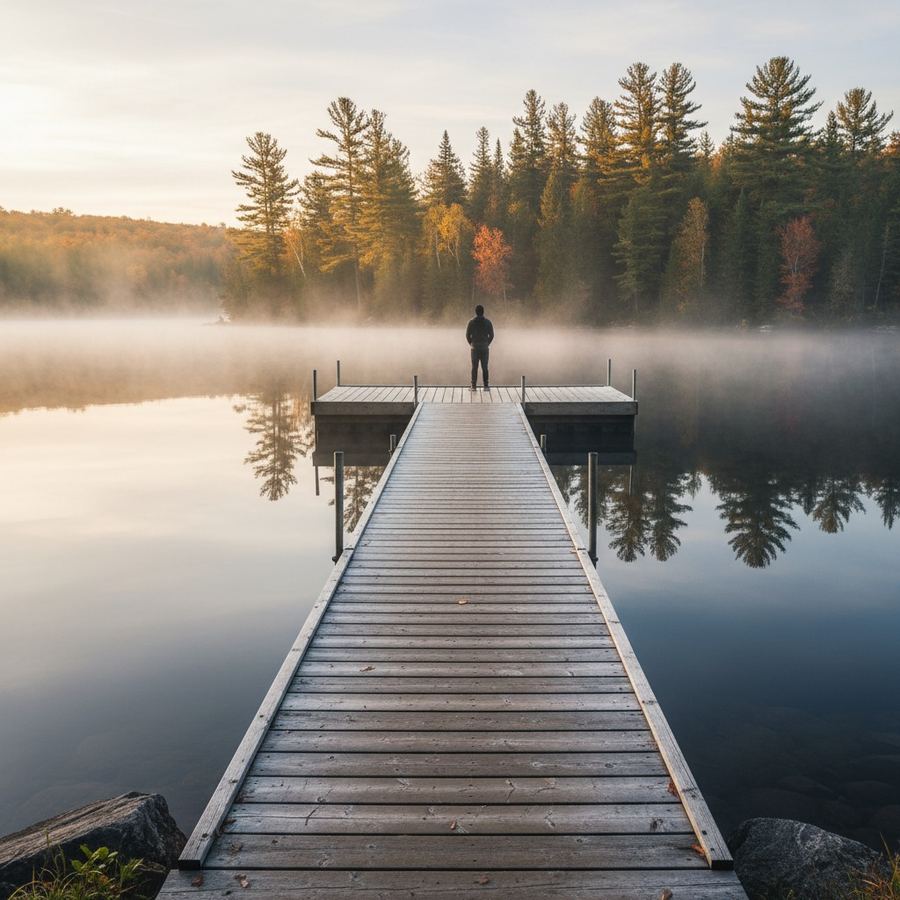
East of Muskoka, the Haliburton Highlands offer a quieter and less expensive alternative. The lakes are smaller, the towns are less commercial, and the landscape is hillier and more densely forested. Haliburton Village and Minden are the main service centres. The region has a strong arts community, with the Haliburton School of Art and Design drawing visitors year-round, and a network of lakes that see far less boat traffic than Muskoka's big three.
Cottage prices in Haliburton run roughly 30 to 50 percent lower than comparable properties in Muskoka, which is still not cheap. Rentals are more available and more affordable, particularly on the smaller lakes that are not within walking distance of a town. The trade-off is fewer restaurants, fewer shops, and more reliance on bringing your own supplies. For many people, that is the entire point.
The Kawarthas
The Kawartha Lakes region, north of Peterborough, is Ontario's most accessible cottage country. The lakes are connected by the Trent-Severn Waterway, a 386-kilometre canal system linking Lake Ontario to Georgian Bay. Locking through from one lake to the next by boat is one of the great summer experiences in the province. The towns of Bobcaygeon, Fenelon Falls, and Buckhorn are small, friendly, and significantly less expensive than Muskoka or Haliburton.
The Kawarthas are flatter and warmer than the Canadian Shield cottage areas. The lakes tend to be shallower and warmer for swimming. The downside is that some Kawartha lakes have water quality issues, with blue-green algae blooms becoming more frequent in recent years, particularly in late summer. Check local health advisories before swimming or letting dogs in the water.
The Alternatives Most People Overlook
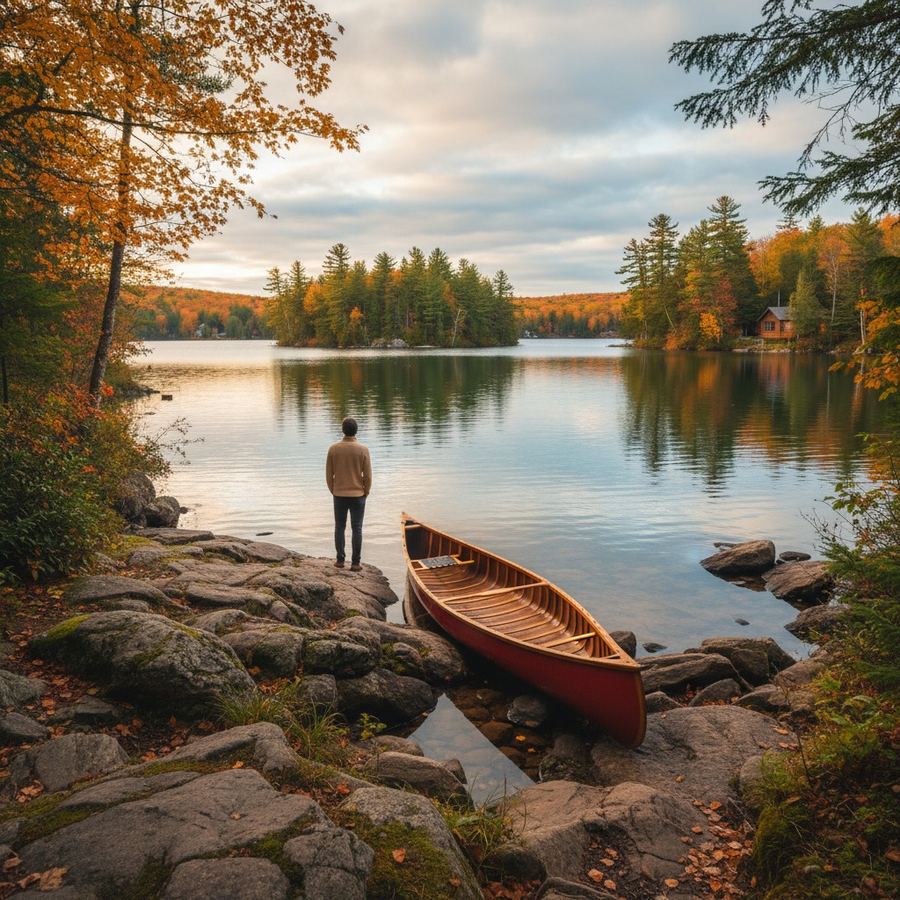
Land O'Lakes, north of Kingston and Napanee, covers a vast tract of Canadian Shield landscape with hundreds of lakes, minimal development, and cottage prices that look like a typo compared to Muskoka. The area is remote by Southern Ontario standards, with limited cell service and long drives on gravel roads. But for people who want genuine solitude and do not need a latte within driving distance, this is the best value in Ontario cottage country.
Rideau Lakes, between Kingston and Smiths Falls, offer a more civilized alternative. The Rideau Canal is a UNESCO World Heritage Site, and the lakes along its route are beautiful, swimmable, and accessible. The towns of Westport, Portland, and Perth provide services without the sprawl. Cottage culture here has a quieter, eastern Ontario character that is distinct from the Muskoka scene.
Northern Simcoe County, particularly the lakes around Orillia and the Severn River area, sits right on the edge of cottage country proper. Lake Couchiching and the smaller lakes nearby are close enough to Toronto (90 minutes to two hours) to make weekend trips easy, but the area lacks the prestige branding of Muskoka. That keeps prices somewhat lower. For local visitor information, orillia.ca covers the Orillia and Lake Couchiching area.
Renting vs. Owning
Owning a cottage in Ontario has become a difficult financial proposition for most families. Even outside Muskoka, waterfront properties in reasonable condition start above $500,000 in most areas and climb steeply from there. Property taxes on waterfront lots are higher than many buyers expect, winterization adds cost, and the maintenance burden on a property you use 15 to 20 weekends a year is real. Septic systems, docks, roofs, and tree removal are constant line items.
Renting, by contrast, has become easier and more expensive simultaneously. Cottage rental platforms list hundreds of properties across the lake districts. Expect to pay $2,000 to $5,000 per week depending on the lake, the property, and the week. Long weekends command premium pricing. The best properties book months in advance for summer. If you can be flexible on dates, the shoulder weeks in June and September offer much better availability and lower rates.
What First-Time Renters Get Wrong
Black flies emerge in late May and peak in June. They bite, they swarm, and they can make an outdoor evening miserable in a way that mosquitoes cannot match. By mid-July, the black flies are mostly gone. Mosquitoes remain but are manageable with repellent and screens. If your first cottage rental is the last two weeks of June, bring a bug jacket and temper your expectations of lakeside dining at dusk.
Cell service is unreliable or nonexistent at many cottage properties, particularly in Haliburton, Land O'Lakes, and northern Muskoka. If you need to work remotely during your stay, confirm internet access before booking. Starlink satellite internet has become the rural default, but not every rental property has it. Air conditioning is rare in traditional cottages. If you are a family accustomed to sleeping in a climate-controlled house, a July heat wave in a cottage with no AC and limited cross-ventilation will test everyone's patience.
The Highway 400 Reality
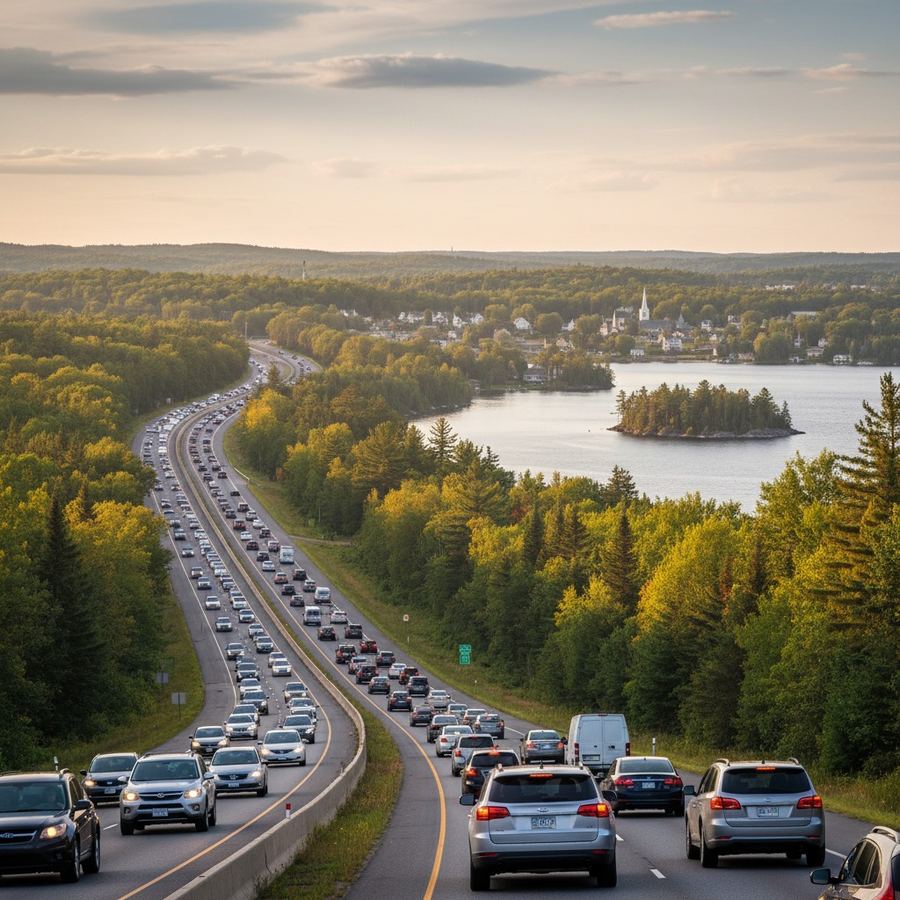
The single biggest factor in the cottage country experience is the drive. Highway 400 from Toronto to Barrie is four lanes in each direction and still grinds to a halt on summer Fridays. From Barrie north, it narrows. The drive from Toronto to Gravenhurst is 180 kilometres and takes about two hours in clear traffic. On a Friday afternoon before a long weekend, it can take three and a half. Sunday southbound is nearly as bad. Leaving by noon Sunday or waiting until after 8 p.m. are the two strategies that work. Everything in between is a slow crawl through Barrie.
For cottage areas further east, Highway 115 to Peterborough and the Kawarthas is less congested. Highway 7 to Perth and the Rideau area is a two-lane highway with truck traffic but generally manageable. The worst corridor, by a wide margin, is the Highway 400 and Highway 11 route into Muskoka. Plan accordingly, or consider a Thursday departure if your schedule allows it. For visitor services and accommodations in the northern corridor, burksfalls.com covers the Burk's Falls area at the gateway to Almaguin Highlands.