Perth was founded in 1816 as a military settlement for disbanded soldiers and Scottish immigrants after the War of 1812. The town is over 200 years old, which is old by Ontario standards, and that age shows in the built environment. Local limestone gives the downtown a weight and permanence that most small Ontario towns, built in wood and later vinyl siding, simply do not have. Gore Street, the main commercial strip, looks like it belongs in a Scottish county town, which is not accidental.
Getting Here
Perth is in Lanark County, about 300 kilometres east of Toronto and roughly 80 kilometres southwest of Ottawa. From Toronto, the drive is approximately 3 hours via Highway 401 east to Highway 15 north through Smiths Falls. From Ottawa, take Highway 7 west, a scenic but slow two-lane road through small communities. The drive from Ottawa is about an hour, making Perth a feasible day trip from the capital. The town sits in the Eastern Ontario region, between the St. Lawrence corridor and the Ottawa Valley.
Gore Street and the Stone Architecture
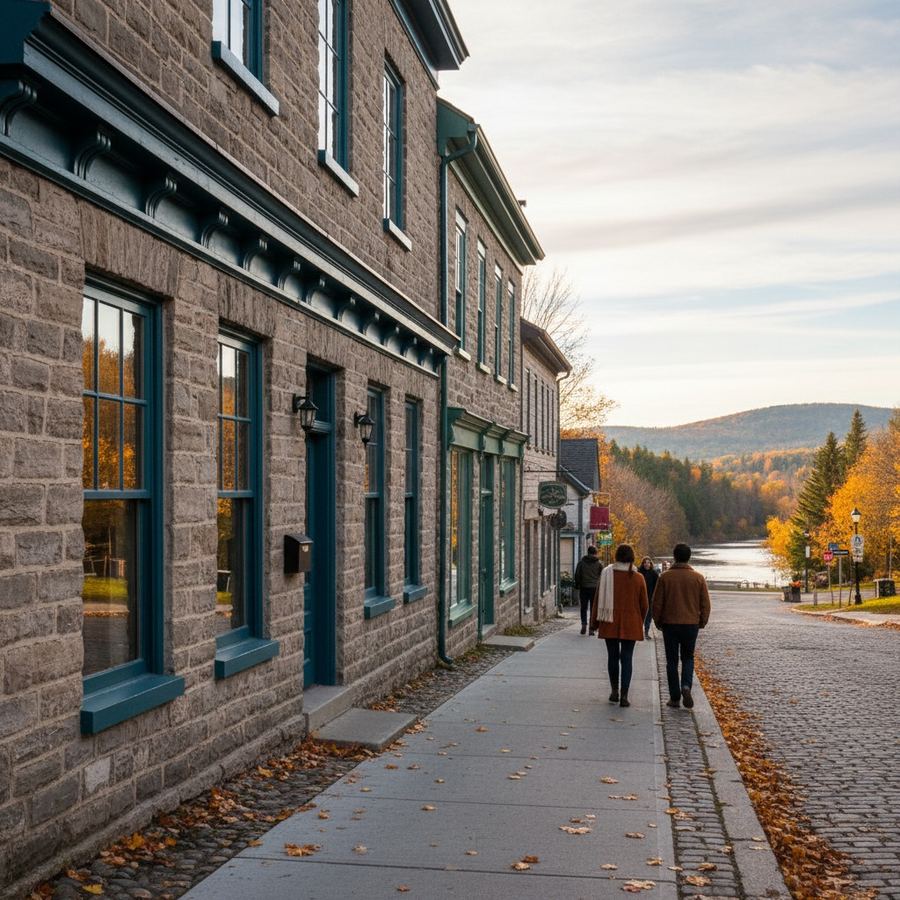
Gore Street is the reason to visit Perth on foot. The limestone commercial buildings, many dating to the 1830s and 1840s, house independent shops, restaurants, bakeries, and a bookshop. The Perth Town Hall (1863) anchors the street. The architecture is consistent enough that the overall streetscape feels cohesive, not a patchwork of eras. Code's Mill, a converted 19th-century woollen mill on the Tay River, now operates as a restaurant and event space. For anyone interested in Ontario's best small-town main streets, Perth belongs on the short list. See our main streets guide for more.
The Tay River and Stewart Park
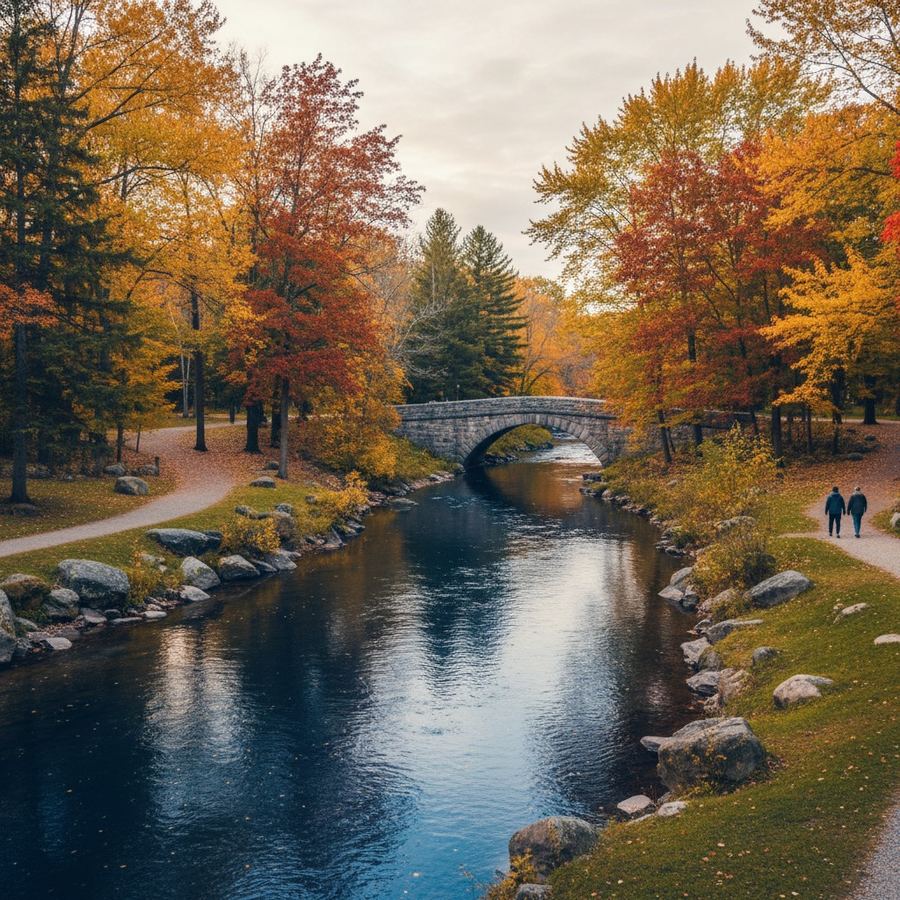
The Tay River runs through the centre of Perth, and a walking trail follows its banks through Stewart Park and the Tay Basin. The basin is a wide, calm section of the river in the middle of town, used for canoeing and kayaking in summer and skating in winter (when conditions allow). Stewart Park hosts the annual Stewart Park Festival, a free outdoor music festival typically held in late July. The park and trail system are flat, well-maintained, and an easy walk from Gore Street.
Crystal Palace and the Perth Kilt Run
The Crystal Palace, a heritage market building in the town centre, hosts events, farmers' markets, and seasonal fairs. The Perth Kilt Run is exactly what it sounds like: an annual running event where participants wear kilts through the streets. It draws a surprising number of runners (and spectators) each September, and the Scottish heritage connection is played up enthusiastically. Perth leans into its founding heritage without overdoing it.
Seasonal Considerations
Perth is a year-round town, not dependent on a single season. Summer brings the Stewart Park Festival and the busiest tourist traffic. Fall colour in Lanark County is excellent, with the drive along Highway 7 from Perth toward Ottawa particularly good in mid-October. The Tay Basin skating, when it happens, is a winter draw. The Perth Christmas market and holiday decorations along Gore Street are well-regarded locally. Spring is mud season in this part of Ontario, and the least interesting time to visit.
For additional event details and visitor information, more at perth.ca provides current schedules.
Practical Notes
Perth is a small town, population around 6,000, and you can walk the entire downtown in 20 minutes. That is part of its appeal. Parking is free on most streets, and you will rarely have trouble finding a spot. The town pairs well with Brockville (about an hour south on Highway 15) or with a broader Eastern Ontario loop. If you are coming from Toronto, Perth makes more sense as an overnight stop than a day trip, given the three-hour drive. The restaurants on Gore Street are above average for a town this size, with a few that would hold their own in a much larger city. The best time to visit is September through early October, when the summer tourists have thinned and the fall colour is beginning.