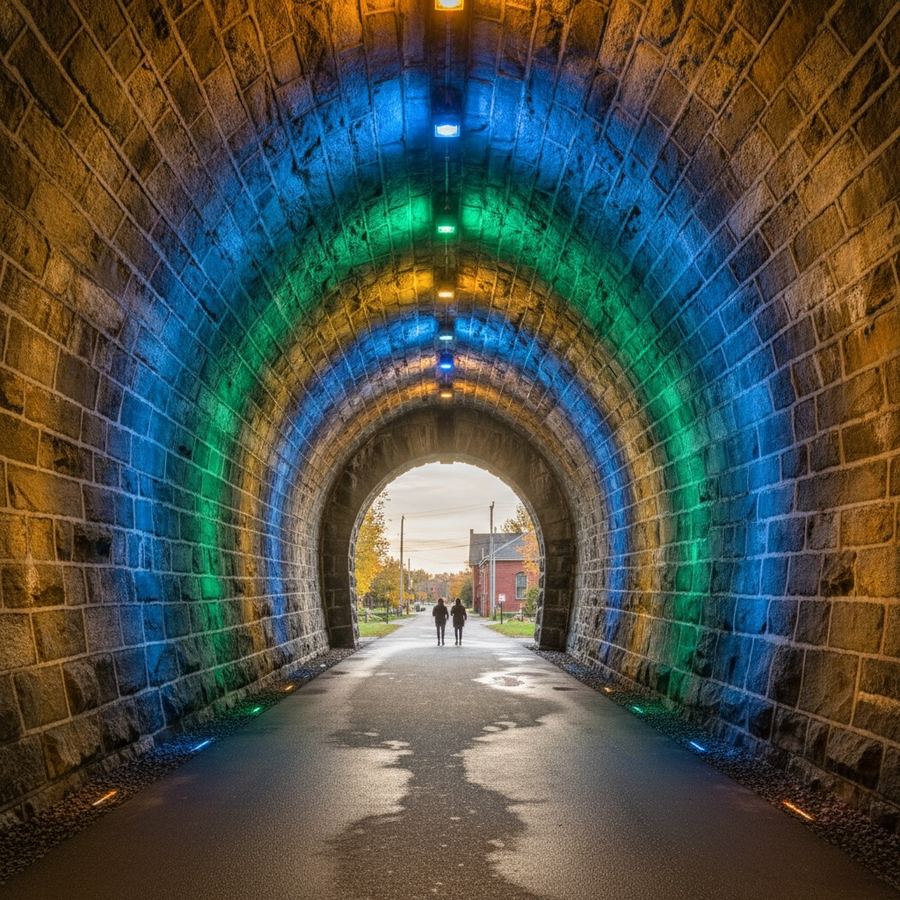
The Brockville Railway Tunnel is the thing that changed this town's profile. Opened as a pedestrian attraction in 2017 after a multi-year restoration, Canada's first railway tunnel (built in 1860) now runs 525 metres under the downtown core, lit with a shifting colour display and a sound installation. It brought a wave of visitors to a St. Lawrence River town that had been quietly going about its business for decades. But Brockville had reasons to visit before the tunnel, and it has more to offer beyond it.
Getting Here
Brockville sits on the St. Lawrence River in Eastern Ontario, about 340 kilometres east of Toronto on Highway 401. The drive takes roughly 3 to 3.5 hours. From Ottawa, it is about 110 kilometres south on Highway 416 to the 401, then east, roughly an hour and 15 minutes. Brockville also has a VIA Rail station on the Toronto-Montreal corridor, which makes it one of the few small Ontario towns reachable by train without a car.
The Railway Tunnel
The tunnel runs from the downtown at Armagh Sifton Price Park to the waterfront, passing directly beneath City Hall. It is free to walk through and open seasonally, typically from May through October. The light-and-sound installation changes patterns as you walk, and the experience takes about 15 to 20 minutes. It is the kind of attraction that sounds gimmicky on paper but works in person, partly because the tunnel itself, blasted through Canadian Shield rock in the 1850s, is genuinely impressive as an engineering artifact.
The 1000 Islands and the Waterfront
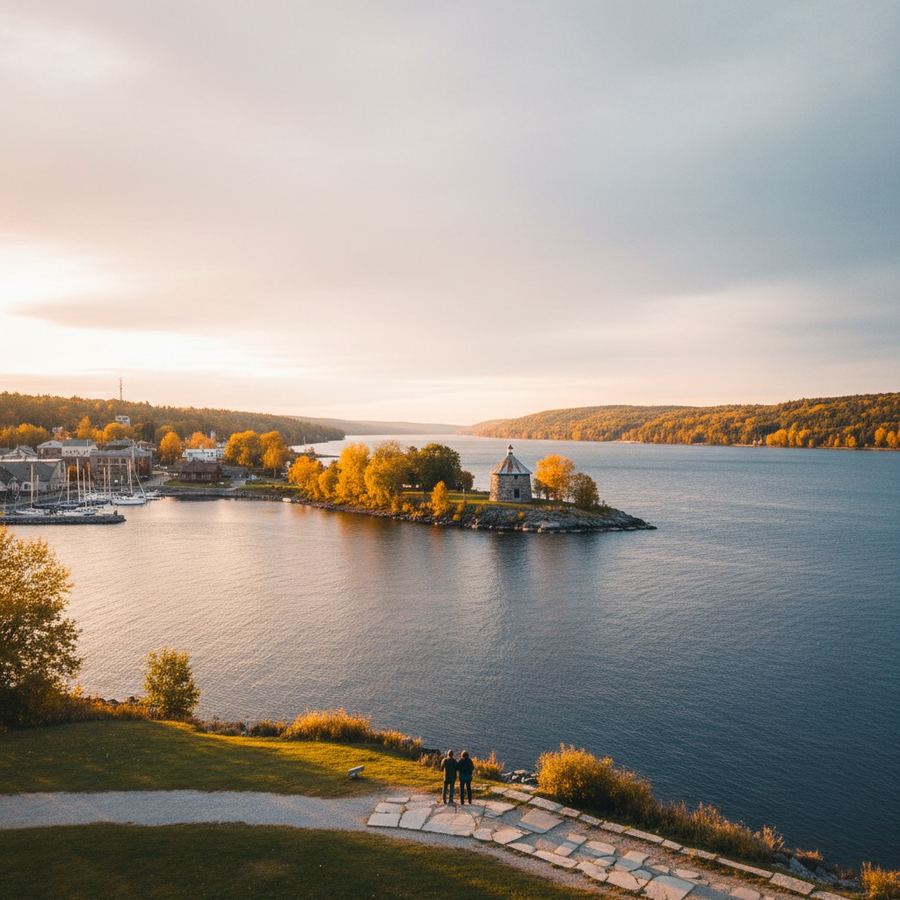
Brockville calls itself the City of the 1000 Islands, and the river access is the town's other major draw. Boat cruises depart from the harbour, running through the island chain with views of the Boldt Castle area, private island cottages, and the international shipping channel. Blockhouse Island, a small park at the harbour entrance, has walking paths, a playground, and views across to New York State. The waterfront itself is well-maintained, with a boardwalk, a marina, and several restaurants with patio seating facing the river.
Heritage Downtown
Court House Avenue runs uphill from the waterfront through Brockville's commercial core. The heritage architecture is intact along much of the street, with limestone and brick buildings from the mid-1800s housing shops, restaurants, and small businesses. The Brockville Museum covers local history from the Loyalist settlement period forward. Fulford Place, an Edwardian mansion built by patent medicine magnate George Fulford, is a short drive east of downtown and operates as a museum. The house is absurdly grand for a town this size, which is part of what makes it interesting.
Seasonal Considerations
The tunnel and boat cruises are seasonal operations, running from late spring through Thanksgiving. Summer is the busiest period, particularly July and August, when the 1000 Islands tourism trade is in full swing. Fall is a strong time to visit: the river views are excellent, the crowds thin, and the tunnel usually stays open into October. Winter in Brockville is quiet. The waterfront is mostly shut down, and the town operates on its year-round economy. For current event listings and hours, the local guide at brockville.com has updated seasonal information.
Practical Notes
Brockville works well as a stop on a longer Eastern Ontario trip. It pairs naturally with Perth (about an hour north) or with a broader loop through the Eastern Ontario corridor. If you are driving between Toronto and Montreal on the 401, Brockville is a far better lunch stop than the highway service centres. Parking downtown is metered but rarely full. The railway tunnel can have a queue on summer weekends, but it moves quickly. The best time for a visit is a weekday in September, when everything is open and the summer crowds have gone. For those interested in longer road trips in the region, see our weekend getaways from Toronto guide.