In 2021 and 2022, a wave of GTA residents bought houses in Collingwood, Barrie, Orillia, and Belleville, many without a clear plan for how daily life would work outside the city. Some found exactly what they wanted. Others discovered that a lower mortgage payment comes with trade-offs nobody mentioned during the bidding war. If you are considering a move to Southern Ontario from the GTA or from out of province, the practical details matter more than the real estate listing photos.
Who Is Moving and Why
The people relocating to smaller Southern Ontario communities tend to fall into a few groups: remote workers who no longer need to commute daily, GTA families priced out of the detached-home market, retirees looking for quieter communities with lower costs, and military families posted to CFB Petawawa or CFB Kingston. Each group faces different realities. A remote worker moving to Collingwood has different needs than a military family arriving in Petawawa for a three-year posting. But several challenges are universal.
Housing Price Reality

The pandemic-era price surge has partially corrected, but Southern Ontario housing is not the bargain it was in 2019. A detached home in Barrie, which averaged around $450,000 in early 2020, peaked above $900,000 in early 2022 and has settled in the $650,000 to $750,000 range as of 2025. Collingwood is similar, with the ski-town premium pushing prices higher for anything within walking distance of the village core. For Collingwood-specific listings and market context, buycollingwoodrealestate.com covers the local market.
Further out, prices drop. Owen Sound, Kincardine, and communities in eastern Ontario offer detached homes starting in the $350,000 to $500,000 range. But "further out" also means further from Toronto, further from major hospitals, and further from the highway network that makes commuting possible. The savings on the house often get offset by transportation costs and reduced access to services. Run the full budget, not just the mortgage comparison.
The Commute Trade-Off
GO Transit runs commuter rail from Barrie to Union Station in Toronto, which has made Barrie the most popular commuter town in Southern Ontario. The ride is roughly two hours each way. That works for people who commute two or three days a week. For five-day-a-week commuters, four hours of daily transit is a grind that wears people down within a year. Highway 400 driving from Barrie to downtown Toronto takes 90 minutes in clear traffic and up to two and a half hours during morning rush.
Beyond Barrie, commuting to Toronto is not realistic as a daily practice. Collingwood to Toronto is nearly two hours each way in good conditions. Orillia is similar. Owen Sound, Prince Edward County, and any community east of Belleville are day-trip distances from Toronto, not commuting distances. If your job requires any in-office presence, be honest about how many days per week you can manage a four-hour round trip before signing a purchase agreement.
Healthcare Gaps
This is the issue that catches the most newcomers off guard. Finding a family doctor in many Southern Ontario communities is extremely difficult. Provincial data consistently shows that rural and small-town Ontario has a severe shortage of family physicians. Towns like Owen Sound, Collingwood, and communities across Simcoe County have waitlists that stretch for years. Walk-in clinics exist in larger towns but are not a substitute for continuous primary care, especially for families with children or seniors with chronic conditions.
Hospital access varies significantly. Barrie has Royal Victoria Regional Health Centre, a large regional hospital. Collingwood has a small community hospital. Owen Sound has a regional hospital serving Grey and Bruce counties. Smaller communities may be 30 to 60 minutes from the nearest emergency department. Specialist referrals often require travel to Toronto, Barrie, or Ottawa. If you or a family member has ongoing medical needs, map the healthcare infrastructure before you choose a town.
Broadband and Connectivity

In-town broadband in places like Barrie, Collingwood, and Belleville is generally adequate. Cable and fibre internet are available from the major providers. Step outside the town boundary, however, and the options thin quickly. Rural properties often rely on fixed wireless, DSL, or satellite. Starlink has become the default internet solution for rural Southern Ontario, offering speeds that make remote work functional where nothing else did. But Starlink costs roughly $140 per month plus a $500 to $800 hardware fee, and performance degrades during peak evening hours as more subscribers come online in a given cell.
If remote work is your reason for moving, test the internet at any property before committing. Ask the current owner or a neighbour what provider they use and what speeds they actually get, not what the provider advertises. The difference between advertised and actual speeds in rural Ontario can be dramatic.
Winter Driving
If you are moving from the GTA to anywhere north or east of Barrie, your relationship with winter is about to change. Toronto gets an average of 100 centimetres of snow per year. Collingwood gets over 300. Owen Sound, exposed to Georgian Bay lake-effect snow, can get dumped on for days at a time. Highway 26 between Stayner and Meaford regularly closes or becomes dangerously slow during winter storms.
Snow tires are not legally mandated in Ontario, but most insurance companies offer a discount for having them and some policies effectively require them between December and March. You will want a set. You will also want a block heater for your vehicle, a good snow shovel, and the knowledge that your morning commute may occasionally be cancelled by weather in a way that it never was in Mississauga. Municipal snow clearing varies widely between communities. Some are excellent. Others are not.
Where the Growth Pressure Is Coming From
The communities feeling the most in-migration pressure are those within two hours of Toronto with some combination of recreational appeal, GO Transit access, or highway proximity. Barrie leads the list and is now a city of over 150,000. Collingwood, Wasaga Beach, and the Simcoe County corridor are growing fast. Prince Edward County has seen a different kind of growth, driven by retirees and the wine-and-food tourism economy. In eastern Ontario, Brockville and Perth are drawing people priced out of the Kingston and Ottawa markets.
This growth brings benefits: new restaurants, better retail, improved infrastructure in some cases. It also brings friction. Long-time residents in small towns are watching their property taxes rise, their local character change, and their housing costs climb beyond what local wages support. If you are moving to a small community, recognize that you are part of a larger pattern and that the reaction from existing residents may range from welcoming to wary.
What Nobody Tells You
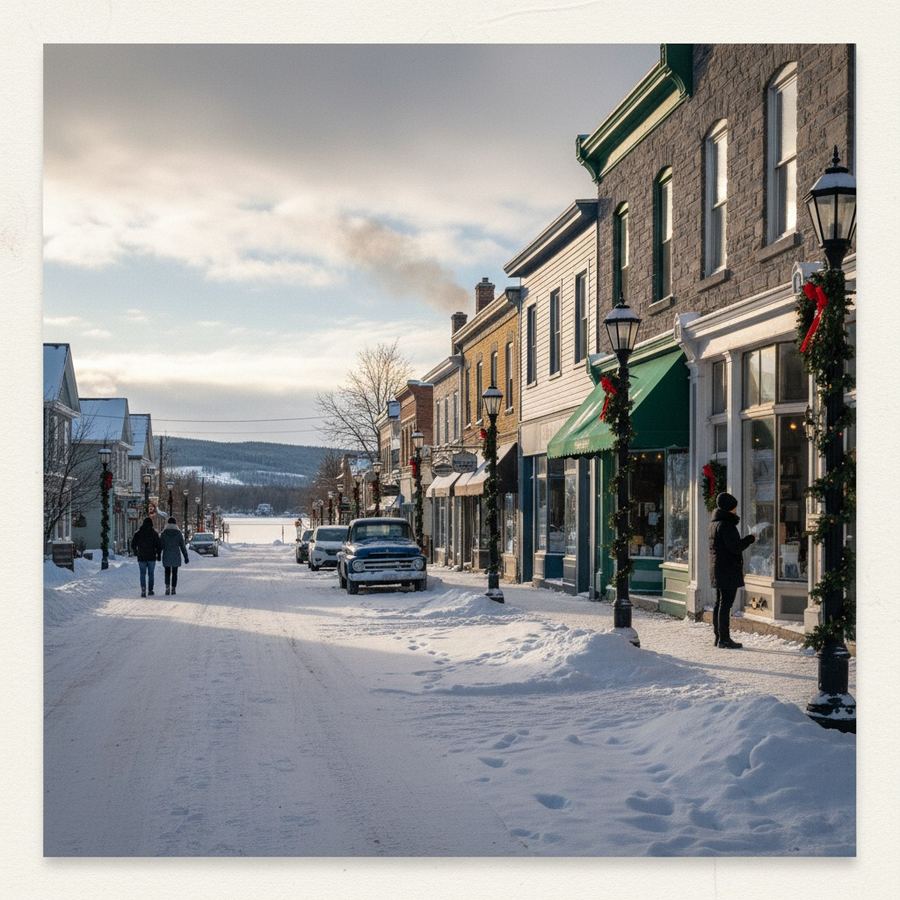
Social isolation is a real challenge for people moving to small towns. The social infrastructure that cities provide, through density, diversity, and sheer volume of people, does not exist in a town of 8,000. Making friends as an adult in a new community takes effort and time. Join something: a curling league, a church, a volunteer fire department, a community garden. Standing in your new kitchen waiting for community to arrive at your door does not work.
Services you took for granted in the GTA may not exist. Some towns lack a dentist. Many lack public transit entirely. Grocery stores may be a 20-minute drive. The variety of restaurants, shops, and entertainment options is dramatically smaller. None of this is a reason not to move. But all of it should be factored in before the decision is made, not discovered afterward.
For people posted to CFB Petawawa, the military community provides a built-in social network that eases the transition significantly. The town of Petawawa itself is small, and petawawa.com covers local resources and services. For broader context on what different communities offer, our Where to Live in Southern Ontario guide compares towns across the region.